


Nitrat kommt natürlich in Böden, Pflanzen und Wasser vor. Erhöhte Konzentrationen können jedoch insbesondere im Grundwasser auftreten. Erfahren Sie, wie der Nitratgrenzwert in Deutschland geregelt ...
Your Cart
(0 products)
Your cart is empty

Access to drinking water is often a challenge in an emergency. In the wild or after a disaster, improvising a water filter becomes an essential skill for survival. Fortunately, it is possible to make one easily using reclaimed materials.
This is a makeshift method that can help temporarily, but it remains limited in a long-term crisis. You should therefore use the best materials available.
If you do not have activated carbon, we recommend using natural charcoal produced after burning wood. It must be crushed finely, as it helps remove certain chemical pollutants present in water. However, avoid barbecue charcoal briquettes, as they contain toxic chemicals.

Take your empty plastic container and cut it into two parts. Keep the top half of the bottle (with the neck), as this will form the filter funnel. Make a few small holes in the cap so the filtered water can flow out slowly.
Inside the neck of the upside-down bottle, firmly place a piece of fabric, a folded bandana or a ball of cotton. This first layer acts as a barrier against the largest particles in the water. It also helps prevent the lower layers from clogging.
Then pour in a generous layer of crushed activated carbon. If using natural charcoal, break it into small pieces of 3 to 5 mm in diameter. This layer is important because it absorbs potentially harmful chemicals present in the water. It also improves taste.
Above the charcoal, add a layer of clean sand. This middle layer filters fine particles, sediment and some micro-organisms. The sand should be as fine as possible and clean to avoid introducing further contamination. If you collect sand outdoors, rinse it first to remove visible impurities.
Complete your filter with a thick layer of gravel. This final stage filters the largest particles from raw water and protects the lower layers of the filter. It helps prevent them from becoming saturated too quickly. The gravel should vary in size, with small stones and slightly larger pebbles for better filtration.
Pour the water to be purified onto the top of the filter (the gravel side). Let the water pass naturally through the different layers before collecting it at the bottle neck outlet. If the water flows slowly, this usually means your filter is working correctly.

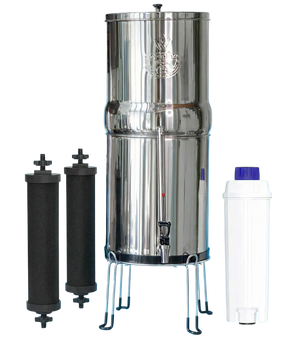
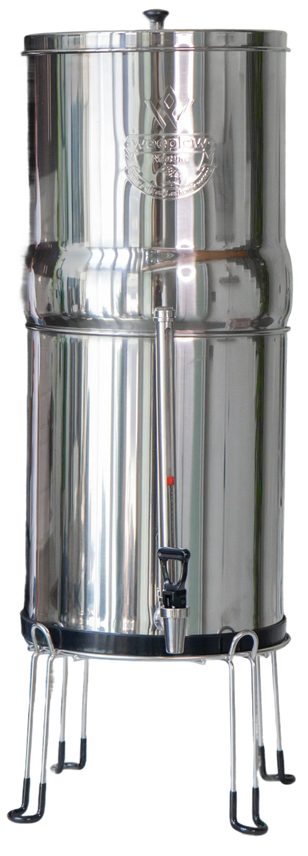
You should understand that this homemade water filter alone does not guarantee fully safe drinking water. It mainly filters solid particles and certain chemical impurities, but does not remove potentially dangerous bacteria or viruses. We recommend using a Weeplow gravity water filter.
After this initial filtration, always boil the collected water for at least one minute to remove harmful micro-organisms. At altitude, it is advisable to increase the boiling time slightly, as water boils at a lower temperature. Finally, use a gravity water filter as an extra step to ensure the water is safe to drink.
If you are in the wild, you may not find every material, even though the planet is heavily polluted. A bandana can be replaced with a T-shirt or plant moss. Natural charcoal can be taken directly from charred wood left from a campfire.
Forest survival expert Jacob Karhu recommends an interesting natural variation. Use the bandana as the first layer, then add fresh plant moss, sand and natural charcoal. This natural filter is especially useful outdoors because these materials are easy to find.
To make the water safe to drink afterwards, you must still remove remaining biological contaminants by using boiling, chemical treatment or a gravity water filter. The latter can replace several other purification methods.
Your improvised water filter can be used several times, but it requires regular maintenance. Change or clean the cotton or fabric after each heavy use to avoid mould or bacteria. Replace the activated or natural charcoal every three to four uses for better filtration.
Sand and gravel can be rinsed and reused several times as long as they remain clean and free from visible contamination. This remains a makeshift solution, and illness from contaminated water is still possible. That is why we recommend using a gravity water filter, which can be used for two years.
This can be a fun or educational activity, for example making a water filter with your children. However, in a real survival situation or during a crisis affecting access to water, more reliable methods should be considered. Your homemade filter may still be useful if you are in an unexpected dangerous situation outdoors without your usual equipment.
Nitrat kommt natürlich in Böden, Pflanzen und Wasser vor. Erhöhte Konzentrationen können jedoch insbesondere im Grundwasser auftreten. Erfahren Sie, wie der Nitratgrenzwert in Deutschland geregelt ...
Nitrate can occur naturally in water, but higher concentrations can come from sources such as agriculture and wastewater. Learn how drinking-water limits work, where nitrate comes from, how to test...
Nitrates et méthémoglobinémie : quels risques pour l’eau du robinet ? Comprenez le lien entre ces deux éléments et ce que cela signifie pour votre eau au quotidien.
Researchers are increasingly studying the possible effects of chronic exposure to nitrates in drinking water. Here is what current research actually says about the potential risks associated with l...
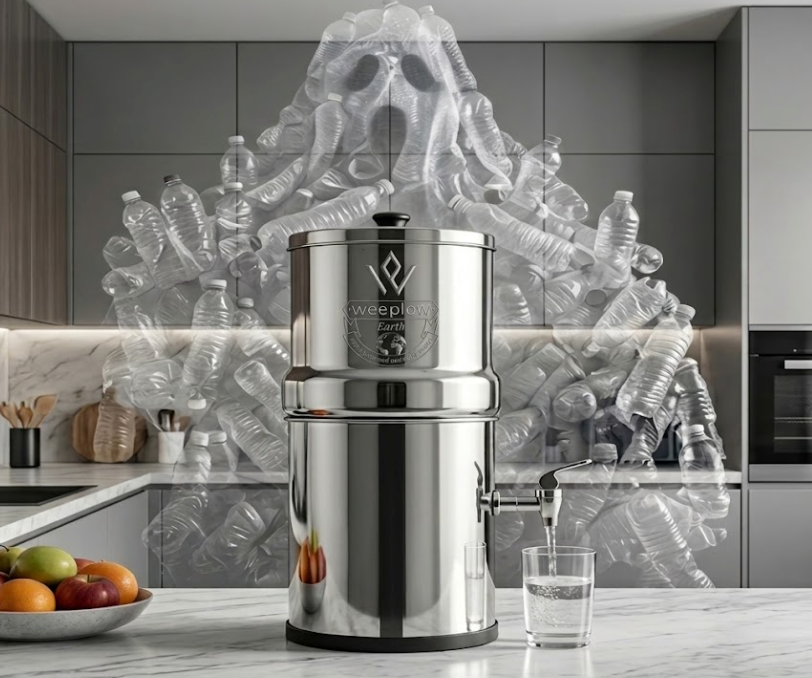
Introduction Each year, a French household spends hundreds of euros on bottled water. It is carried home from the supermarket, stored in the kitchen, reassured by the image of mountains on ...